
Publications
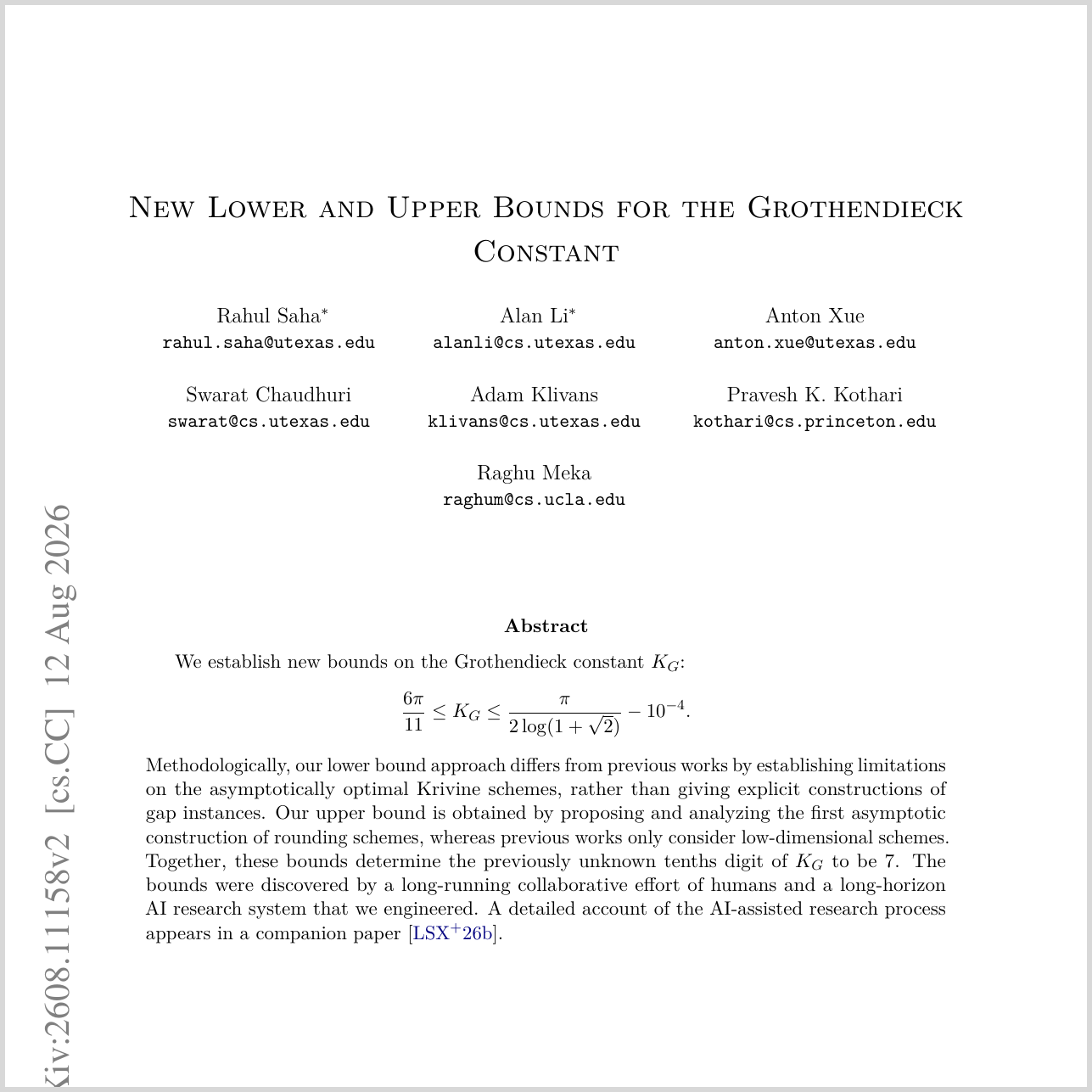
New Lower and Upper Bounds for the Grothendieck Constant
We establish new bounds on the Grothendieck constant $K_G$: $6\pi/11 \le K_G \le \pi/(2\log(1+\sqrt{2})) - 10^{-4}$. Methodologically, our lower bound approach differs from previous works by establishing limitations on the asymptotically optimal Krivine schemes, rather than giving explicit constructions of gap instances. Our upper bound is obtained by proposing and analyzing the first asymptotic construction of rounding schemes, whereas previous works only consider low-dimensional schemes. Together, these bounds determine the previously unknown tenths digit of $K_G$ to be 7. The bounds were discovered by a long-running collaborative effort of humans and a long-horizon AI research system that we engineered. A detailed account of the AI-assisted research process appears in a companion paper.
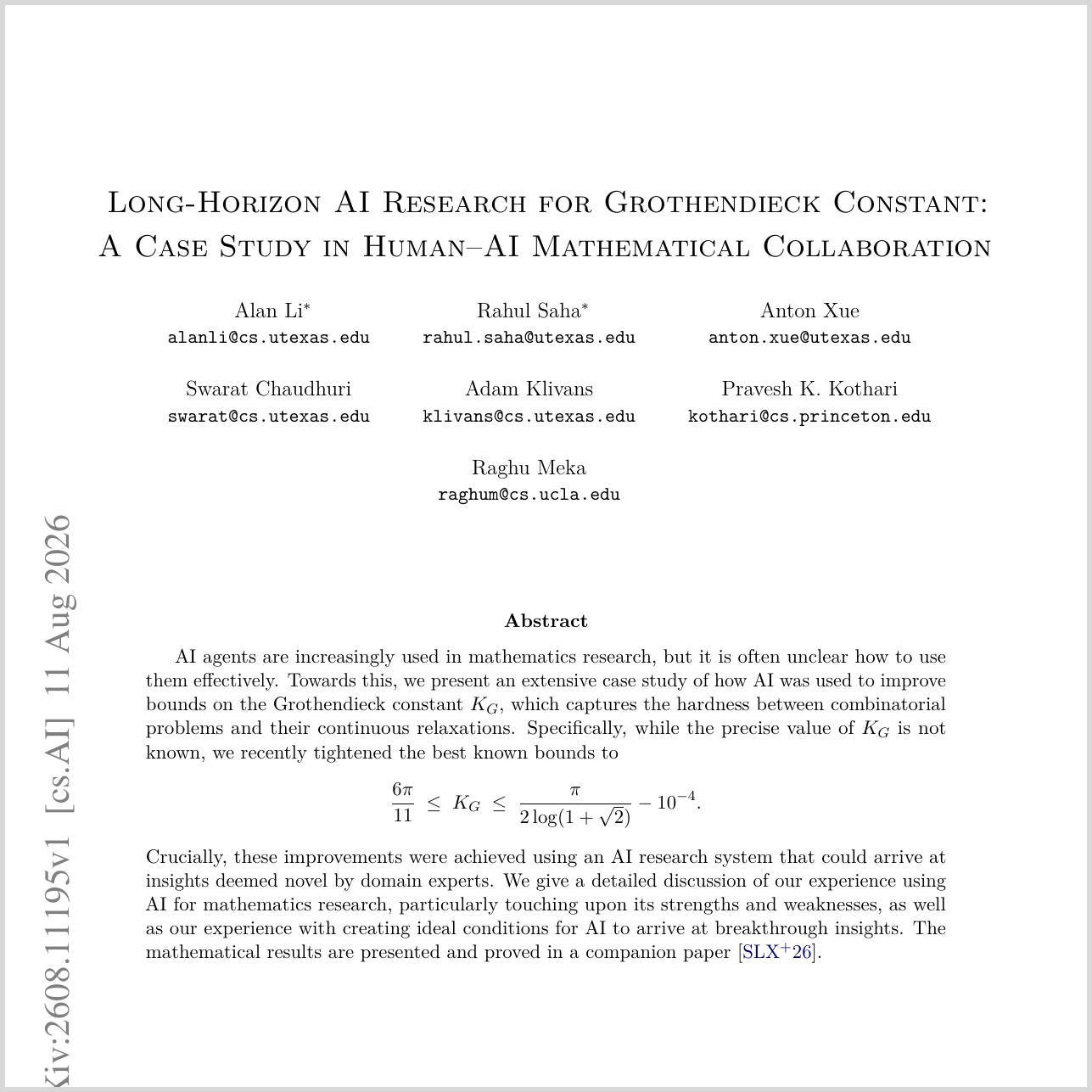
Long-Horizon AI Research for Grothendieck Constant: A Case Study in Human-AI Mathematical Collaboration
AI agents are increasingly used in mathematics research, but it is often unclear how to use them effectively. Towards this, we present an extensive case study of how AI was used to improve bounds on the Grothendieck constant $K_G$, which captures the hardness between combinatorial problems and their continuous relaxations. Specifically, while the precise value of $K_G$ is not known, we recently tightened the best known bounds to $6\pi/11 \le K_G \le \pi/(2\log(1+\sqrt{2})) - 10^{-4}$. Crucially, these improvements were achieved using an AI research system that could arrive at insights deemed novel by domain experts. We give a detailed discussion of our experience using AI for mathematics research, particularly touching upon its strengths and weaknesses, as well as our experience with creating ideal conditions for AI to arrive at breakthrough insights. The mathematical results are presented and proved in a companion paper.
Engineering mtDNA Deletions by Reconstructing End-Joining in Human Mitochondria
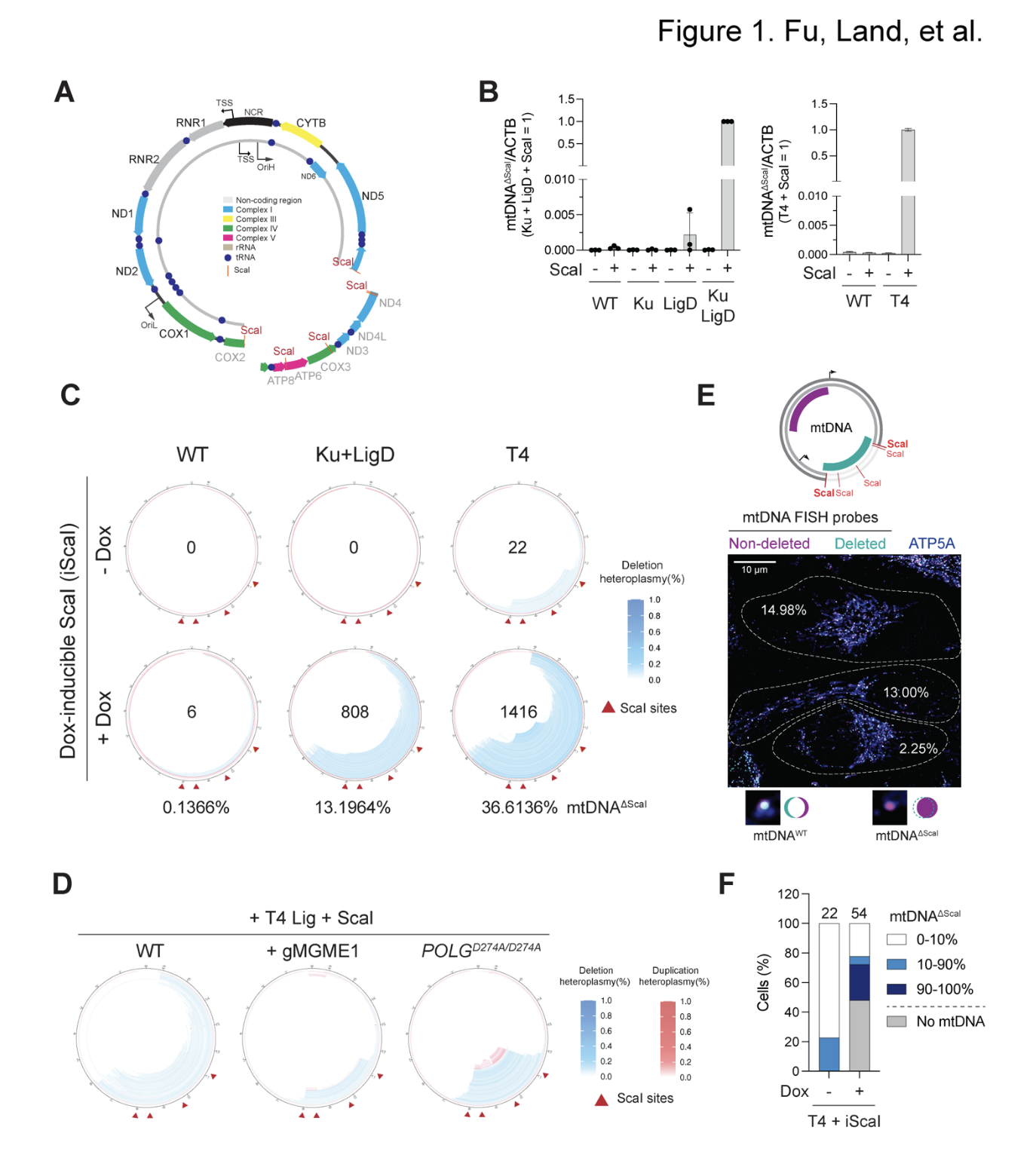
Recent breakthroughs in the genetic manipulation of mitochondrial DNA (mtDNA) have enabled the precise introduction of base substitutions and the effective removal of genomes carrying harmful mutations. However, the reconstitution of mtDNA deletions responsible for severe mitochondrial myopathies and age-related diseases has not yet been achieved in human cells. Here, we developed a method to engineer specific mtDNA deletions in human cells by co- expressing end-joining (EJ) machinery and targeted endonucleases. As a proof-of-concept, we used mito-EJ and mito-ScaI to generate a panel of clonal cell lines harboring a ~3.5 kb mtDNA deletion with the full spectrum of heteroplasmy. Investigating these isogenic cells revealed a critical threshold of ~75% deleted genomes, beyond which cells exhibited depletion of OXPHOS proteins, severe metabolic disruption, and impaired growth in galactose-containing media.

Shunno Diye Bhaag Korle Ki Hoy
This is a Q&A book written with three friends, answering some of the most frequently asked questions by both the general public as well as talented middle to high schoolers about math.
A New Approach Towards Autoformalization
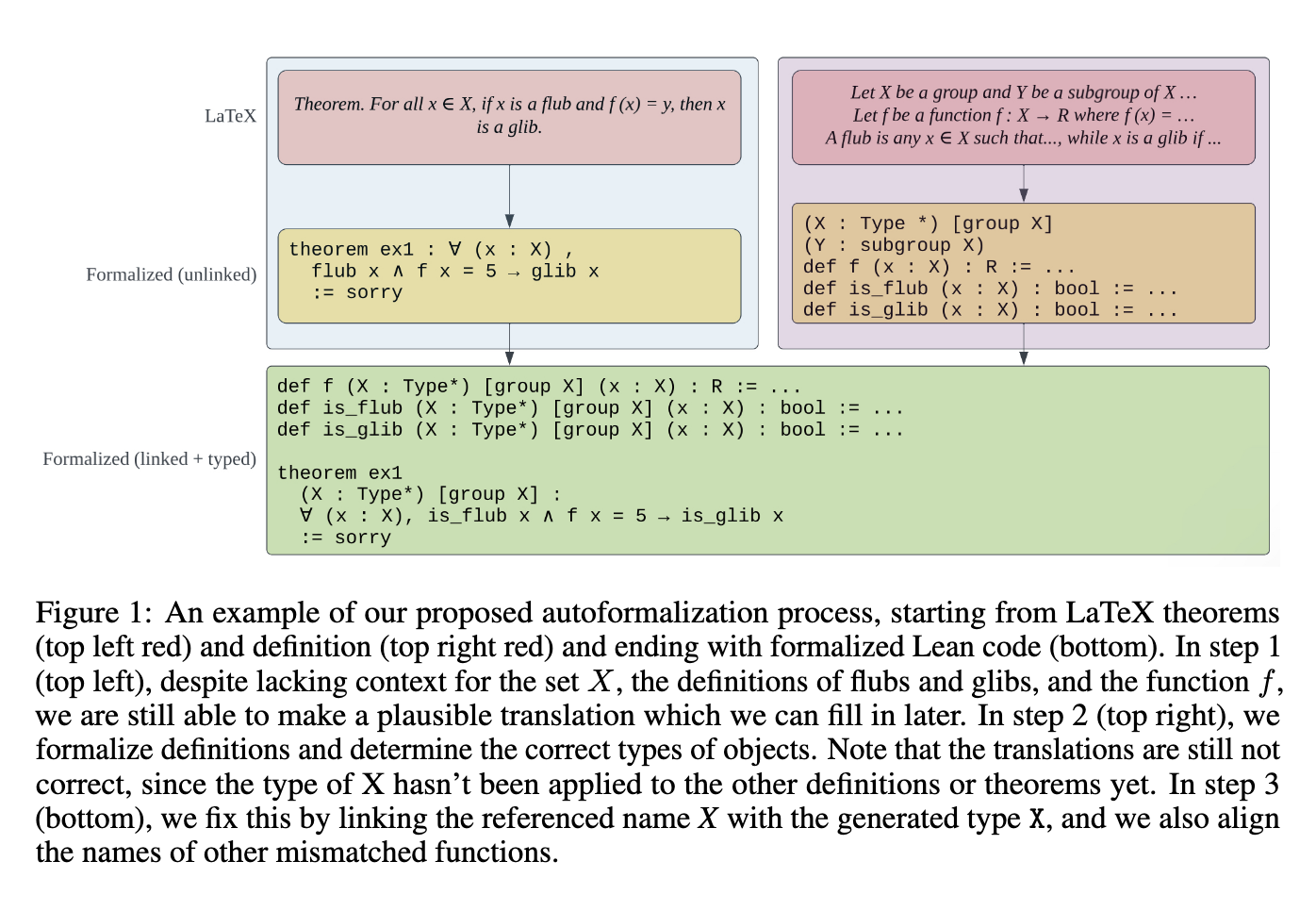
Autoformalization is the task of automatically translating natural language mathematics into a formal language that can be verified by a program. In this paper, we propose an avenue towards tackling autoformalization for research-level mathematics, by breaking the task into easier and more approachable subtasks: unlinked formalization (formalization with unlinked definitions and theorems), entity linking (linking to the proper theorems and definitions), and finally adjusting types so it passes the type checker. In addition, we present arXiv2Formal, a benchmark dataset for unlinked formalization consisting of 50 theorems formalized for the Lean theorem prover sampled from papers on arXiv.org.
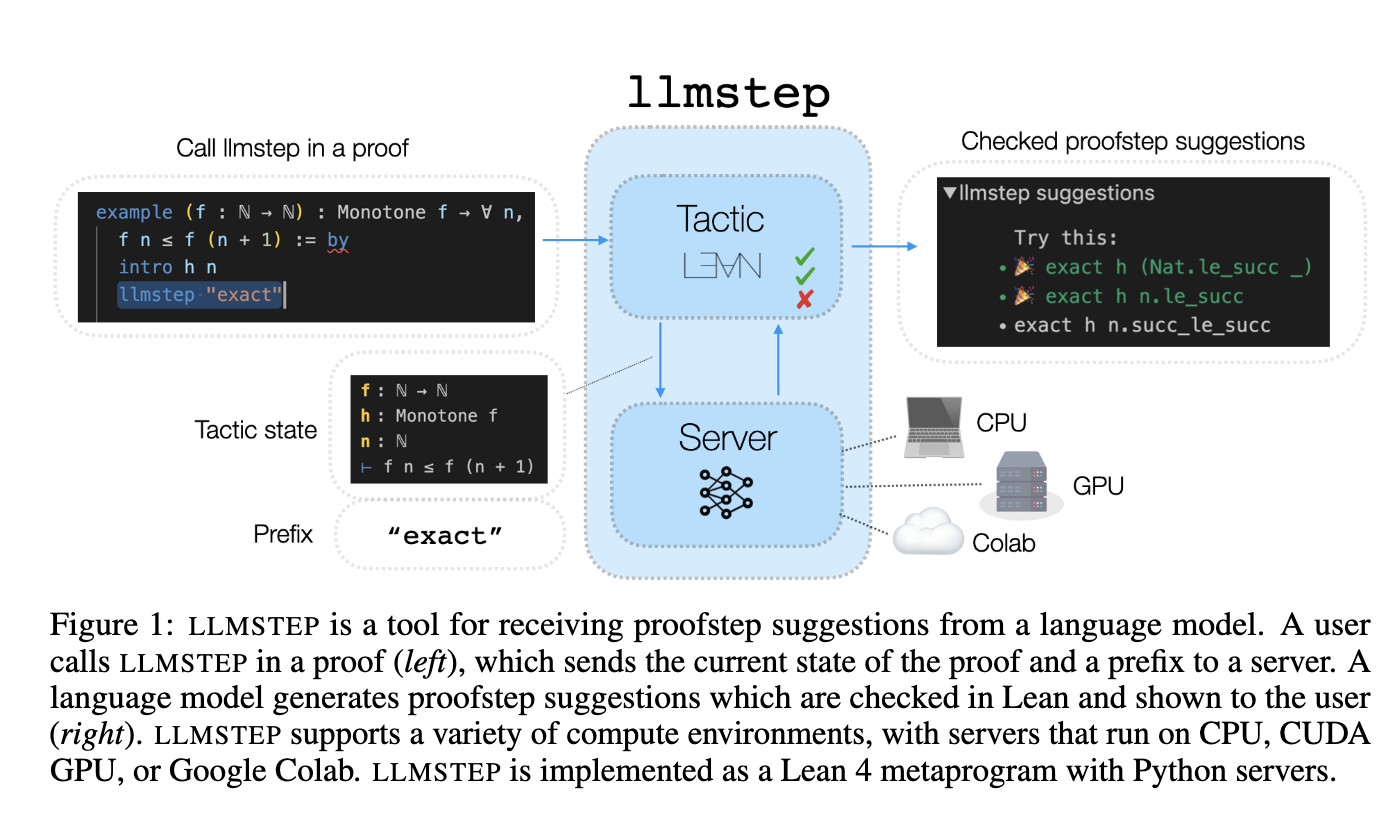
LLMSTEP: LLM Proofstep Suggestions in Lean
We present LLMSTEP, a tool for integrating a language model into the Lean proof assistant. LLMSTEP is a Lean 4 tactic that sends a user's proof state to a server hosting a language model. The language model generates suggestions, which are checked in Lean and displayed to a user in their development environment.
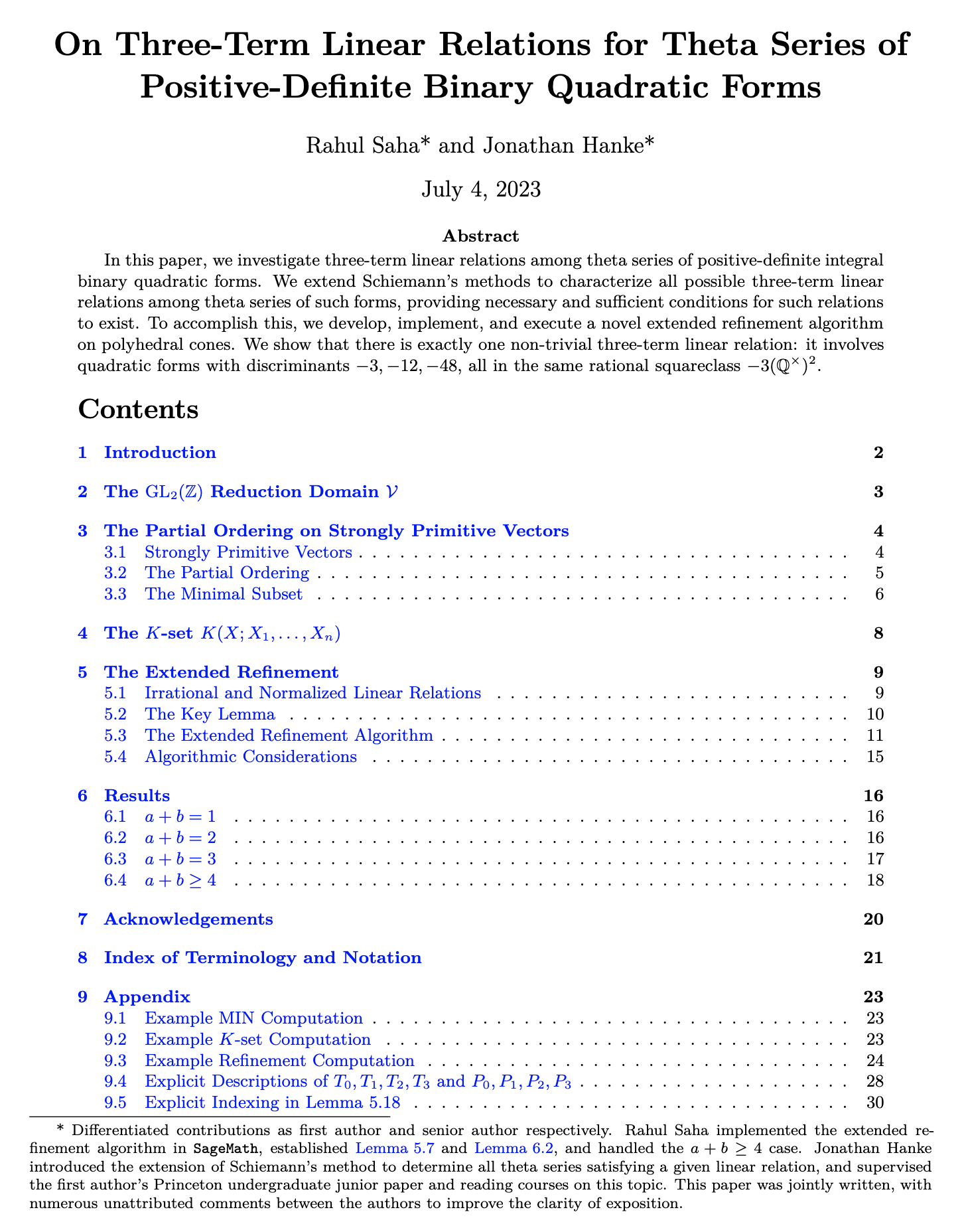
On Three-Term Linear Relations for Theta Series of Positive-Definite Binary Quadratic Forms
In this paper, we investigate three-term linear relations among theta series of positive-definite integral binary quadratic forms. We extend Schiemann's methods to characterize all possible three-term linear relations among theta series of such forms, providing necessary and sufficient conditions for such relations to exist. To accomplish this, we develop, implement, and execute a novel extended refinement algorithm on polyhedral cones. We show that there is exactly one non-trivial three-term linear relation: it involves quadratic forms with discriminants −3,−12,−48, all in the same rational squareclass −3(ℚ×)2.